Every day, there are new articles sharing that organizational models and ways of working must change in our new AI-enabled world. This one about middle managers being replaced with player coaches was one that caught my eye. If this is actually happening, then what does this actually mean or look like in terms of how we work together in the modern era? That’s what this post will explore!
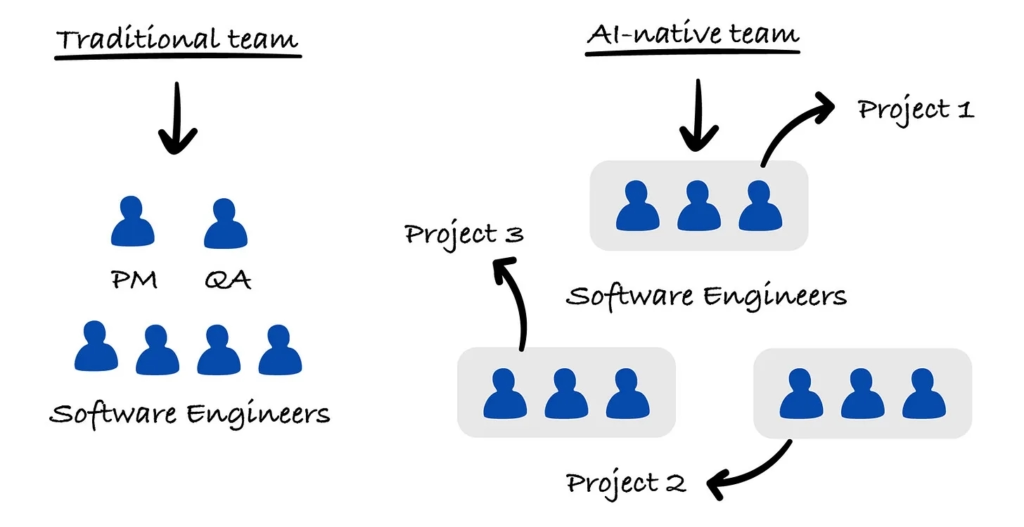
The most important takeaway here is the size of the team; it’s small. This comes with a host of advantages, especially speed. Small groups minimize the decision trap™️ and coordination headwinds of large organizations. Instead, decisions are documented in a lightweight, auditable manner with their reasoning behind them like Architecture Decision Records (ADRs). When debating options that can be visualized, showing an option should take less than a day with rapid, AI-powered development/prototyping. No need to align with hundreds of stakeholders; your small team is accountable for decision making and delivery.
The ROI of debating vs experimenting has changed; the cost of making the wrong decision has shrunk to an all time low. We need to adjust our mental model with this change. “Code wins arguments;” this is how Meta built its record-breaking Threads app with a small team before AI coding tools were popular.
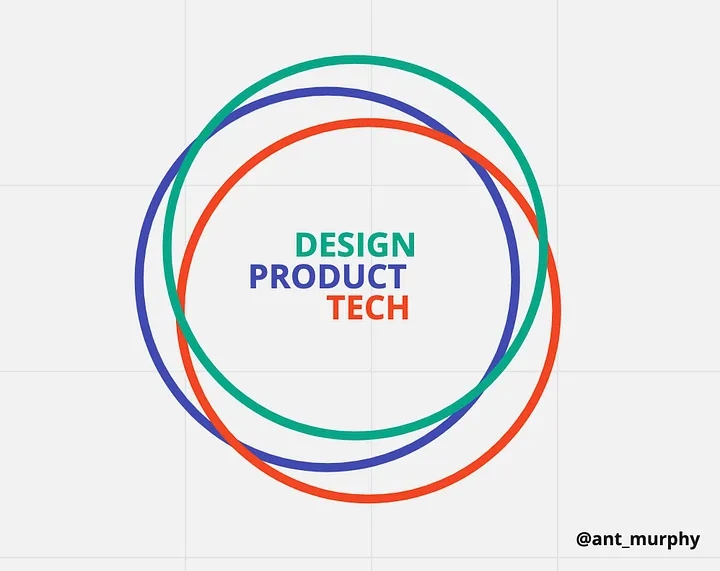
At the same time, in an AI-driven world, role boundaries overlap more and more:
The PM of an AI native team is expected to be a product engineer, or a “builder,” not a traditional PM. PMs are now expected to code with AI assistance at companies like Meta. At the same time, they are not absolved from traditional PM duties like customer research or producing strategy. And with tools like Replit and Claude Design, why not through product design into the mix as well.
Don’t just take my word for it; this is all over the internet right now:
If you can’t tell, here is where I am being a tad hyperbolic. Of course there’s a buzzworthy headline like “half of product managers are in trouble.” However, I admit, it worked on me; I watched the whole thing and recommend you do too. Because if it’s real, you’ll be thankful you did, and if you don’t agree with it, you need to be well-versed enough to refute the claim.
I started this post sharing something I believe, but what does being an AI builder mean? Does it mean PMs are now expected to be engineers? Is that the best use of their time and company resources? Or is there a more nuanced take that complements engineering instead of combining with it? After all, engineers and PMs both still exist even at the companies inventing AI.
What is clear: the roles are evolving, our team structure is evolving, and we have to evolve with it. Personally, AI is a new tool we can’t ignore. Do I believe it is over-hyped? Yes — what isn’t in tech? But if you approach this with an open mind (“the builder mindset”), you should be having fun with it; I know I have! No, not writing worse PRDs I didn’t need help with. But I am excited to share my journey with you all to give good AI use cases as a counter to the shallow slop you see on your feed every day!


 not writing worse PRDs I didn’t need help with. But I am excited to share my journey with you all to give good AI use cases as a counter to the shallow slop you see on your feed every day!
Leave a Comment