

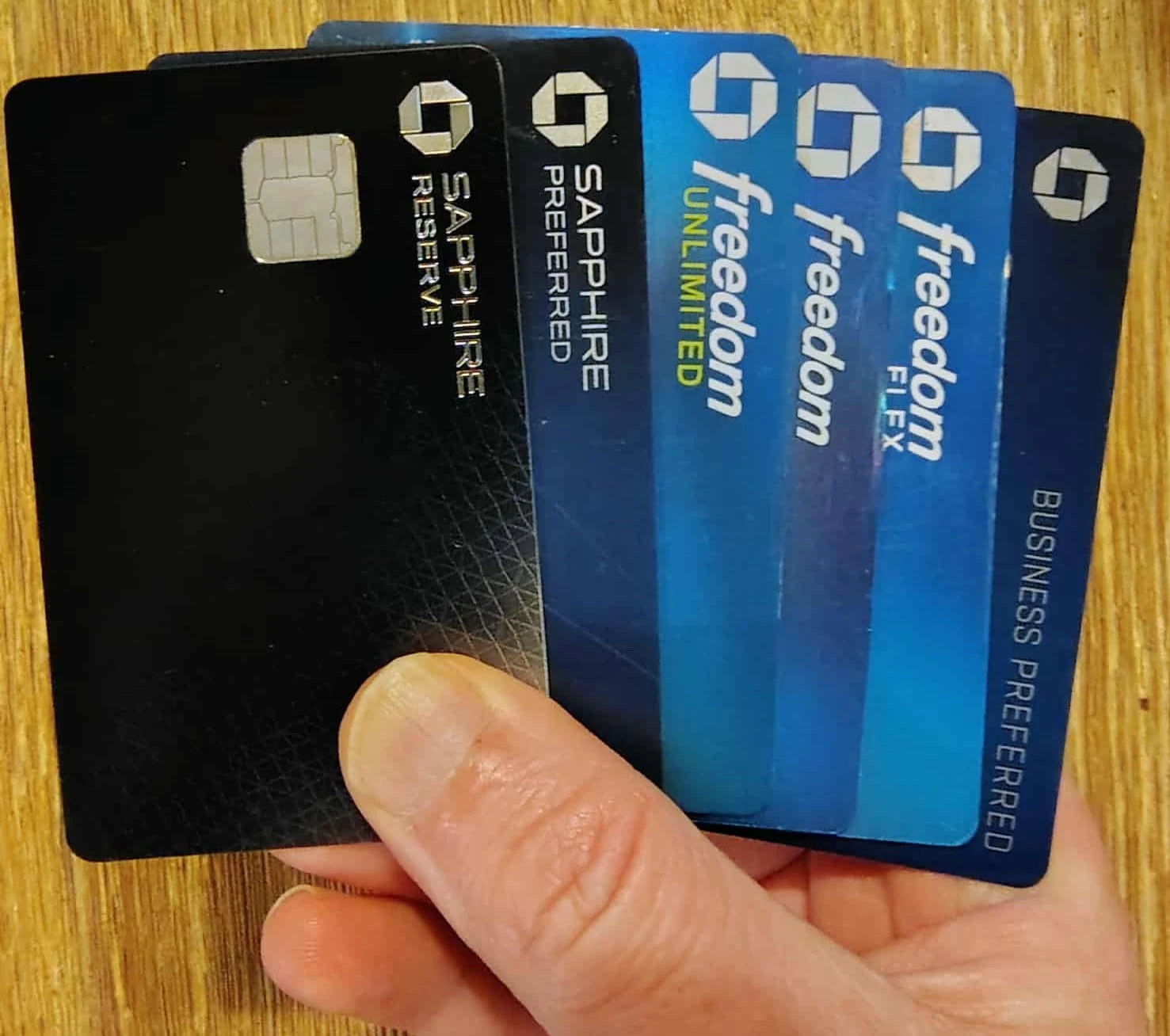
Two years ago, I shared with everyone one of many many hobbies:  the credit card game. Since then, I have kept up with updates, but 2025 is bringing about such sweeping changes I need to not just update past posts, but completely rewrite them. First up is this post as an updated to my main recommendation of Chase’s entire ecosystem of credit cards.
Cut to the Chase: Do you still recommend the Sapphire cards?
As a reminder, Chase UR points are worth $0.01 natively. This means that with a 50% boost, they are worth $0.015 per point. So why then does The Points Guy value them at over $0.02 per point in August 2025? This is due to the value that transferring points directly to airlines can have. In my experience, this is the minimum value such transfers result in, and often you can get $0.04 to $0.07 per point in value when transferring directly! 🤯
If I’m new to the game, which Sapphire card do you recommend?

But for advanced users, is the Sapphire Reserve still worth it?
Absolutely; I will be keeping mine! And there was another sneaky change: you can now have both the Preferred and Reserve at the same time. So, with the recommendation above to start with the Sapphire Preferred, you can always add on the Reserve later! You can choose to downgrade the Preferred to a free card at the time, but you can no longer churn the Preferred like I recommended in the past.
And what about the entire Chase ecosystem; do you still recommend adding on other cards outside of the Sapphire card?
Proposed Credit Cards and Order
My overall recommendation and order of cards to get has not changed. However, the details of each card — why to get a card — have been updated below. Also be sure you read the Chase 5/24 Appendix at the end of this article before you start applying for credit cards.
Step 1: The Chase Sapphire
Sapphire Preferred
Primary Reward Categories

Primary Benefits
Temporary Bonus Reward Categories & Partnerships
Sapphire Reserve
Primary Reward Categories

Primary Benefits
Temporary Bonus Reward Categories & Partnerships
Note there are even more benefits if you spend more than $75K in a single calendar year on this card, but I don’t recommend this given I recommend maximizing bonuses across different cards.
Step 2: Chase Freedom Unlimited
My original recommendation to pair this card with a Sapphire card still holds! If you pair with the Sapphire Reserve, then transferring points to it still makes sense for the chance at leverage Points Boost. And heck, sometimes this will be worth more than the 50% bonus from before!
To summarize the previous recommendation, you get this card as it is a free card that gives you 1.5 points per dollar spent on non-bonus categories; the Sapphire cards only give you 1!
Primary Reward Categories
Temporary Bonus Reward Categories & Partnerships
Step 3: The Chase Freedom Flex
What’s this, another card named something similar? Yes. This is another free card that isn’t used as much, but its rotating 5% bonus categories are usually useful things like grocery stores, gas stations, or Paypal purchases, making even a few thousand dollars of spend on this card add up! But yes, I mostly use not one, but two of these cards maxing out that recurring Q4 Paypal bonus to stock up on Warhammer eBay purchases…
Primary Reward Categories
Temporary Bonus Reward Categories & Partnerships
Step 4: Chase Ink Business Preferred
I admit, I was hoping Chase would miss a loophole with this card given it also used to offer a 25% bonus in travel redemption of points through the Chase portal; this card is effectively the business version of the Sapphire Preferred. Well, they didn’t miss this; that benefit has been removed. However, I always got this card for the free cell phone insurance combined with the 3x bonus on phone service purchases. This is the best card in the business if you’re a clutz like me and break your screen enough to need this! Note the insurance covers theft and cracked screens, although there is a $100 deductible per claim.
See here for more instructions on applying to small business credit cards, and here if you want more details about why you qualify for a small business credit card.
Primary Reward Categories
Primary Benefits
Step 5: Chase Ink Business Cash
This card is effectively the business version of the Freedom Flex mentioned above, but instead of rotating 5% categories every quarter, it’s the same: office supply stores and internet, cable, and phone services. While your phone bill is going to the Ink Business Preferred mentioned above, your internet and cable bill(s) go here.
You might be thinking “office supply stores? Who still goes there?” Well, you have to realize that gift cards purchased there will qualify. This means there are people who go to Office Depot in January every year and buy thousands of dollars of gift cards for what is effectively 5% off. While that is extreme, this is a useful tactic if you have a known larger purchase coming up and can get 5% off of it this way!
Last but not least, this card is good if you don’t have another credit card that gives bonus rewards on gas purchases.
Primary Reward Categories
(Optional) Step 6: Chase Ink Business Unlimited
You really don’t need this card in addition to the Freedom Unlimited, but it gives you an additional large one-time intro bonus opportunity for free. I used to recommend this card more when churning was possible. Since Chase shut that down entirely it’s truly optional, but useful if you need a boost of points!
Primary Reward Categories
Conclusion
So with all of these Chase credit cards, you earn bonus points on:
You can also earn over 350,000 bonus points in sign up bonuses (not including minimum spend rewards, or bonus categories), valued at $7,000+ if you transfer all points to partners at $0.02/point (or better).
But wait – there’s more! You can have your partner follow the same guide instead of adding each other as authorized users, so you can double the rewards – and yes, you can transfer points to each other’s cards!
If you’ve made it this far in this guide, you now have enough points to go on an absolutely amazing vacation with a special someone. All I ask is you show off with your fellow Personal Finance gurus!
FAQ
What about the Chase Ink Premier card?
At the time of this writing, this is the only Chase credit card that explicitly disallows transferring points across cards or to transfer partners; it is strictly a cash back card. This restriction defeats the entire credit card game spelled out here, so it doesn’t belong as a part of this guide.
What about the new Chase Sapphire Reserve Business card?
While this card has a huge 200,000 point intro bonus, it requires $30,000 of spend in 6 months with the same $795 annual fee. Most benefits can already be had with the personal Chase Sapphire Reserve card along with the Ink Business Preferred which actually get you more benefits than this card. I simply do not recommend this card unless you have niche use for it.
Appendix: Chase’s 5/24 Rule
There is one “gotcha” to know before you start on your journey of credit card rewards: Chase limits approval for new cardholders by following what is called the “5/24 rule.” You cannot have more than 5 applications for credit in the past 24 months to be approved. Thus, when you want to open Chase cards, you must take order of operations into account to maximize your rewards. There are a few things to note:
“How do I check where I stand in regards to the 5/24 rule?”
As mentioned in the “where do I start?” section of my intro post to this series, you should audit your credit report annually (which is free) and see how many credit pulls currently exist on your account so you can be strategic about which card(s) to open when.
If you Google search “Free Credit Report,” you will be overwhelmed with a barrage of sites (including untrustworthy ads at the top 😡). I trust and recommend the US government’s recommendation.
This guide is written assuming you currently have zero applications for credit in the past 24 months. For most of us, however, that is usually not the case. If you are at or beyond the 5/24 limit, I would wait until you get down to four credit applications in the past two years before starting this process. If you are in between 1-4 credit applications in the past two years, then I would start with the first step outlined below (the Chase Sapphire) and then pivot as needed to business cards (which don’t count against the 5/24 limit) until previous credit applications are more than two years old (enabling you to apply for other personal cards).
“Wait, business credit cards?”
Yes, you read that right. Did you sell something on eBay last year? You’re a sole proprietor! Don’t worry, business revenue can be $0, and all cards will still be linked under one login and points from business cards can be transferred to personal cards just fine. See here for more instructions on applying to small business credit cards, and here if you want more details about why you qualify for a small business credit card.
“Assume I have the space in the 5/24 rule. How quickly do you open new cards?”
One at a time. All Chase cards have introductory bonus offers that are met only when you hit a minimum spend over an initial period of time after opening the card (usually three months, but sometimes longer). You’re always going to want to hit this “intro bonus” before you open a new card, which will also naturally space your credit applications to help with the 5/24 rule.
Appendix: Disclaimer
This is not financial advice. I also will do my best to keep this page up to date, but if you see something out of date, please message me so that I can update it. This page contains affiliate links, however, I was not paid to share my opinion.
Leave a Comment